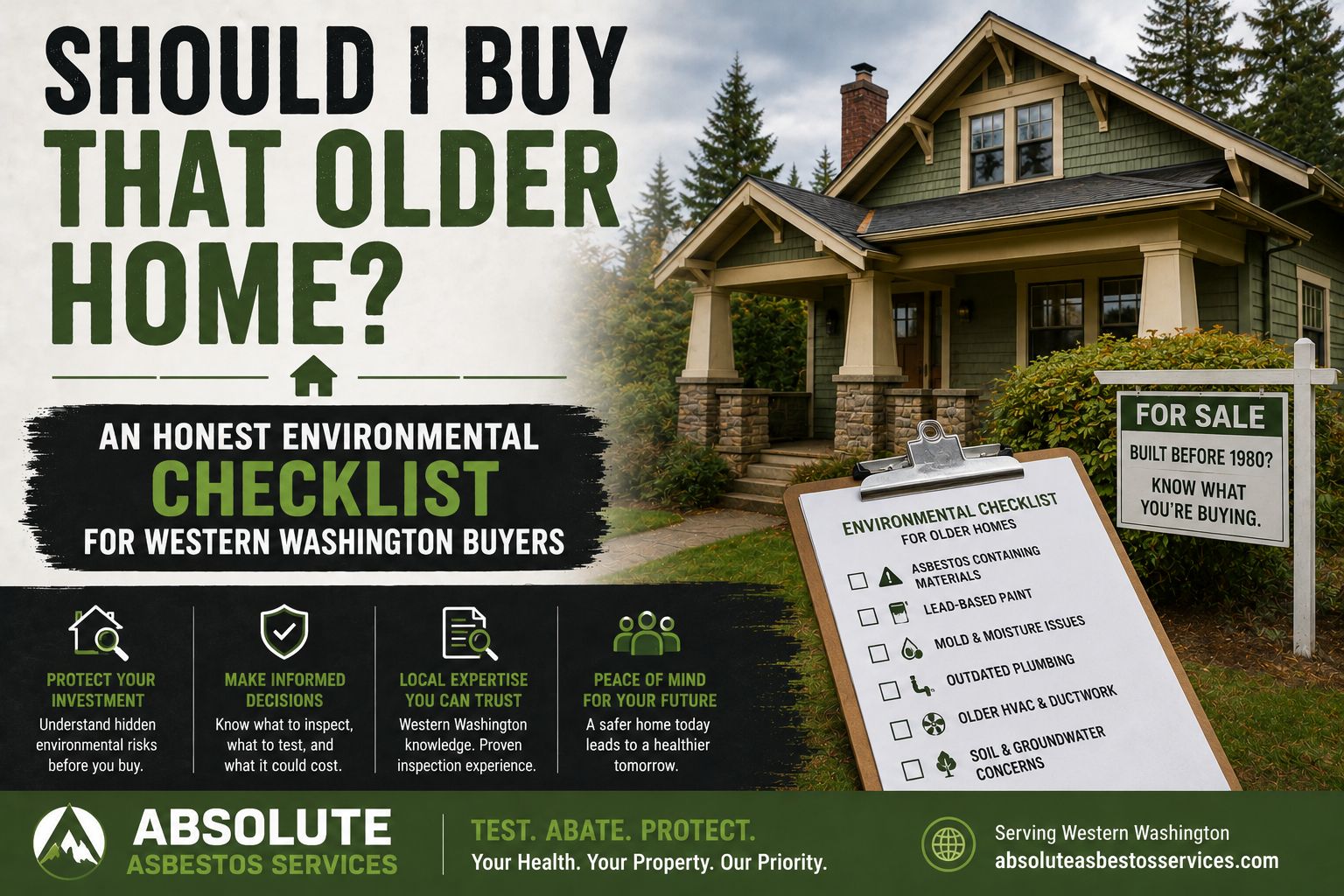
Should I Buy That Older Home? An Honest Environmental Checklist for Western Washington Buyers
Buying a home is one of the most significant financial decisions you will ever make. In Whatcom County and the broader Pacific Northwest, that decision comes with a layer of environmental complexity that most buyers don’t fully appreciate — until after closing.
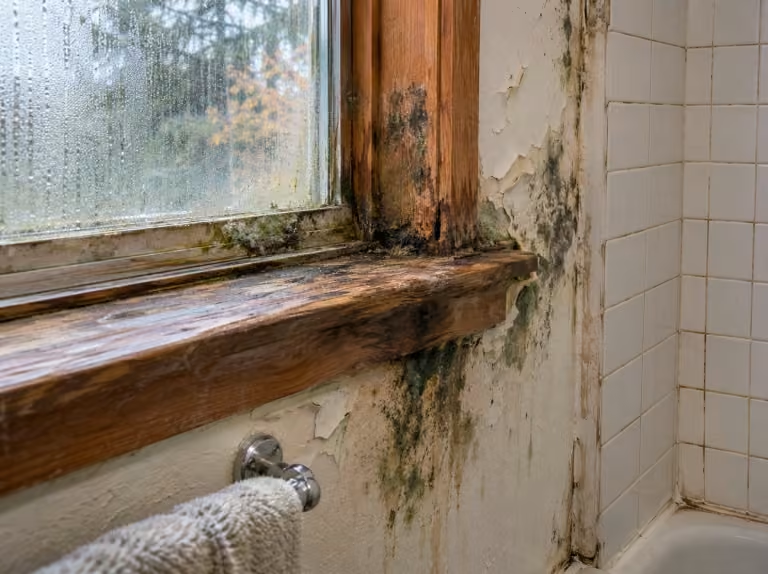
Older homes across Bellingham, Ferndale, Lynden, Blaine, Oak Harbor, and Anacortes carry a legacy of building materials that were perfectly legal and widely used at the time of construction, but are now known to pose serious health risks. Asbestos, lead-based paint, and mold are the three most common hidden hazards lurking in pre-1980 Pacific Northwest homes — and none of them are covered by a standard home inspection.
This guide is written specifically for Whatcom County and Island County home buyers who want to protect their health, their family, and their investment before the ink dries on the purchase agreement.
Why a Standard Home Inspection Isn’t Enough
A licensed home inspector is trained to evaluate the structural and mechanical condition of a property — the roof, foundation, electrical panel, HVAC system, and plumbing. What they are not trained or licensed to do is identify, sample, or assess environmental hazards such as asbestos-containing materials, lead paint, or mold.
This gap creates real risk for buyers. A home can pass a standard inspection with a clean bill of health and still contain asbestos floor tile beneath new vinyl, lead paint under fresh coats of latex, or mold hidden behind recently finished basement walls. These are not theoretical scenarios — they are situations our team at Absolute Asbestos encounters regularly across Whatcom and Island County.
The solution is straightforward: supplement your standard home inspection with targeted environmental testing before you close.
The Environmental Checklist Every Buyer Should Run
Determine the Age of the Home
This is your first filter. If the home was built before 1980, the likelihood of asbestos-containing materials is high. If it was built before 1978, lead-based paint is presumed present under federal EPA guidelines. Homes built before 1960 may have asbestos in a wide range of materials including pipe insulation, floor tile, ceiling texture, roofing, and siding.
Age alone doesn’t tell you whether materials are hazardous — but it tells you where to start looking.
Request an AHERA Asbestos Inspection
An AHERA (Asbestos Hazard Emergency Response Act) building inspection is the gold standard for identifying suspect asbestos-containing materials. A certified inspector will conduct a thorough visual assessment of the property and collect bulk samples from suspect materials, which are then analyzed by an accredited laboratory.
In Whatcom County, this inspection should be conducted by an AHERA-accredited inspector — not a general contractor, not a home inspector, and not the seller’s handyman. The inspector must hold current Washington State certification through the Department of Labor & Industries.
Common locations where asbestos is found in Pacific Northwest homes include:
- Vinyl floor tile and the black mastic adhesive beneath it
- Popcorn (acoustic spray) ceilings
- Attic insulation, particularly vermiculite (Zonolite brand)
- Pipe and duct insulation in basements and crawlspaces
- Exterior siding (particularly fiber cement or “transite” panels)
- Roofing felt and shingles
- Drywall and drywall joint compound and textures
- Textured wall coatings
Request Lead Paint Testing
Federal law requires sellers of pre-1978 homes to disclose known lead paint hazards, but disclosure is not the same as testing. Many sellers genuinely don’t know whether lead paint is present — especially if the home has been painted multiple times over the decades.
An EPA RRP-certified lead inspector can test painted surfaces throughout the home using XRF (X-ray fluorescence) technology or collected paint chip samples. Pay particular attention to:
- Window sills and door frames (high friction areas where lead dust accumulates)
- Exterior painted surfaces
- Kitchens and bathrooms
- Areas where paint is chipping, peeling, or deteriorating
If you have young children or are planning a renovation that will disturb painted surfaces, lead testing is non-negotiable.
Check the Attic for Vermiculite Insulation
This deserves its own line item. Vermiculite attic insulation — sold under the brand name Zonolite — was widely distributed throughout the Pacific Northwest from the 1940s through the 1990s. Approximately 70% of the world’s vermiculite supply during that period came from a mine in Libby, Montana, which was contaminated with naturally occurring asbestos.
Zonolite looks like small, grayish-brown pebbles and is typically found loose in attic spaces. If you see it, do not disturb it. Have a certified asbestos inspector collect a sample for laboratory analysis before proceeding with any purchase, renovation, or additional insulation installation.
Negotiate Based on Findings — Before Closing
Here is where environmental testing directly protects your financial interests. When you have a written inspection report identifying asbestos-containing materials, lead paint, or mold, you have documented leverage to:
- Request remediation by a licensed contractor before closing
- Negotiate a price reduction to cover remediation costs
- Request a credit at closing to fund post-purchase abatement
- Walk away from the transaction if hazards are extensive
Without testing, you have no leverage — and you assume all liability the moment you take title.
What to Do If Environmental Hazards Are Found
Finding asbestos, lead, or mold in a home you’re under contract to purchase is not necessarily a reason to walk away. These hazards are manageable when addressed by certified professionals.
The key is having accurate information and a clear remediation plan before you close. Request a written scope of work and cost estimate from a licensed environmental contractor. That document becomes your negotiating tool with the seller, and your roadmap for a safe renovation if you proceed.
Absolute Asbestos provides pre-purchase environmental inspections and written reports specifically designed to support real estate transactions across Bellingham, Ferndale, Lynden, Blaine, Birch Bay, Oak Harbor, and all of Whatcom and Island County. Our reports are formatted to support negotiation and NWCAA compliance.
Call Absolute Asbestos Before You Close
If you are under contract on a home built before 1980 anywhere in Whatcom or Island County, contact our team today. We offer fast turnaround on pre-purchase inspections and written reports, and we understand the time constraints of a real estate transaction.
Call us at (425) 923-6994 or email info@absoluteasbestosservices.com
Don’t let a hidden environmental hazard become your problem after closing. Let us give you the information you need to buy with confidence — or negotiate from a position of knowledge.
Absolute Asbestos is Bellingham’s AHERA-accredited environmental services provider, serving Western Washington. Our team holds all required Washington State certifications for asbestos inspection, testing, removal, lead testing, lead abatement, mold testing, and mold remediation.
Frequently Asked Questions
Does a standard home inspection check for asbestos?
No. A licensed home inspector is trained to evaluate the structural and mechanical condition of a property, but they are not certified to identify, sample, or assess asbestos-containing materials. You need a separate AHERA-accredited asbestos inspection performed by a Washington State-certified environmental professional.
How much does a pre-purchase asbestos inspection cost in Whatcom County?
Costs vary depending on the size of the home and the number of suspect materials that require sampling. Generally, a residential AHERA inspection in the Bellingham and Whatcom County area ranges from a few hundred to several hundred dollars. Given that asbestos abatement can cost thousands to tens of thousands of dollars, the inspection cost is minimal relative to the financial risk it mitigates.
What happens if asbestos is found in the home I want to buy?
Finding asbestos does not mean you have to walk away. Asbestos-containing materials that are in good condition and will not be disturbed can sometimes be managed in place. However, if you plan to renovate or if materials are deteriorating, professional abatement is required. Use the inspection findings to negotiate remediation or a price reduction before closing.
Are sellers in Washington State required to disclose asbestos?
Washington State law requires sellers to disclose known material defects, and some real estate contracts specifically address environmental hazards. However, many sellers genuinely don’t know whether asbestos is present. Disclosure requirements do not replace the need for independent testing — that responsibility falls to the buyer to protect their own interests.
What is vermiculite insulation and should I be concerned about it?
Vermiculite is a lightweight mineral insulation commonly found in attics of homes built between the 1940s and 1990s. Most vermiculite sold in the U.S. during that period came from the Libby, Montana mine, which was contaminated with asbestos. If you see loose pebble-like insulation in the attic of a home you’re considering purchasing, do not disturb it and have it professionally sampled before proceeding.
My lender is requiring a mold inspection — what does that involve?
A professional mold inspection typically includes a visual assessment of moisture-prone areas (crawlspace, basement, attic, bathrooms), moisture meter readings on structural framing, and air quality sampling if mold is suspected or visible. A written report documents findings and, if mold is present, recommends a remediation scope. Lenders may require clearance testing after remediation before funding the loan.
Can I require the seller to pay for asbestos or lead paint remediation?
This is a negotiating matter between buyers and sellers, but having a written inspection report from a certified professional gives you documented, objective grounds to request remediation or a purchase price reduction. Without that documentation, you have no leverage. Many experienced real estate agents in Whatcom County recommend environmental testing as a standard contingency for pre-1980 homes.
How quickly can Absolute Asbestos complete a pre-purchase inspection?
We understand that real estate transactions move on tight timelines. We work to accommodate the scheduling constraints of buyers under contract and typically provide written inspection reports within a few business days of the site visit. Contact us at (425) 923-6994 to discuss your timeline and we will do our best to meet your closing schedule.